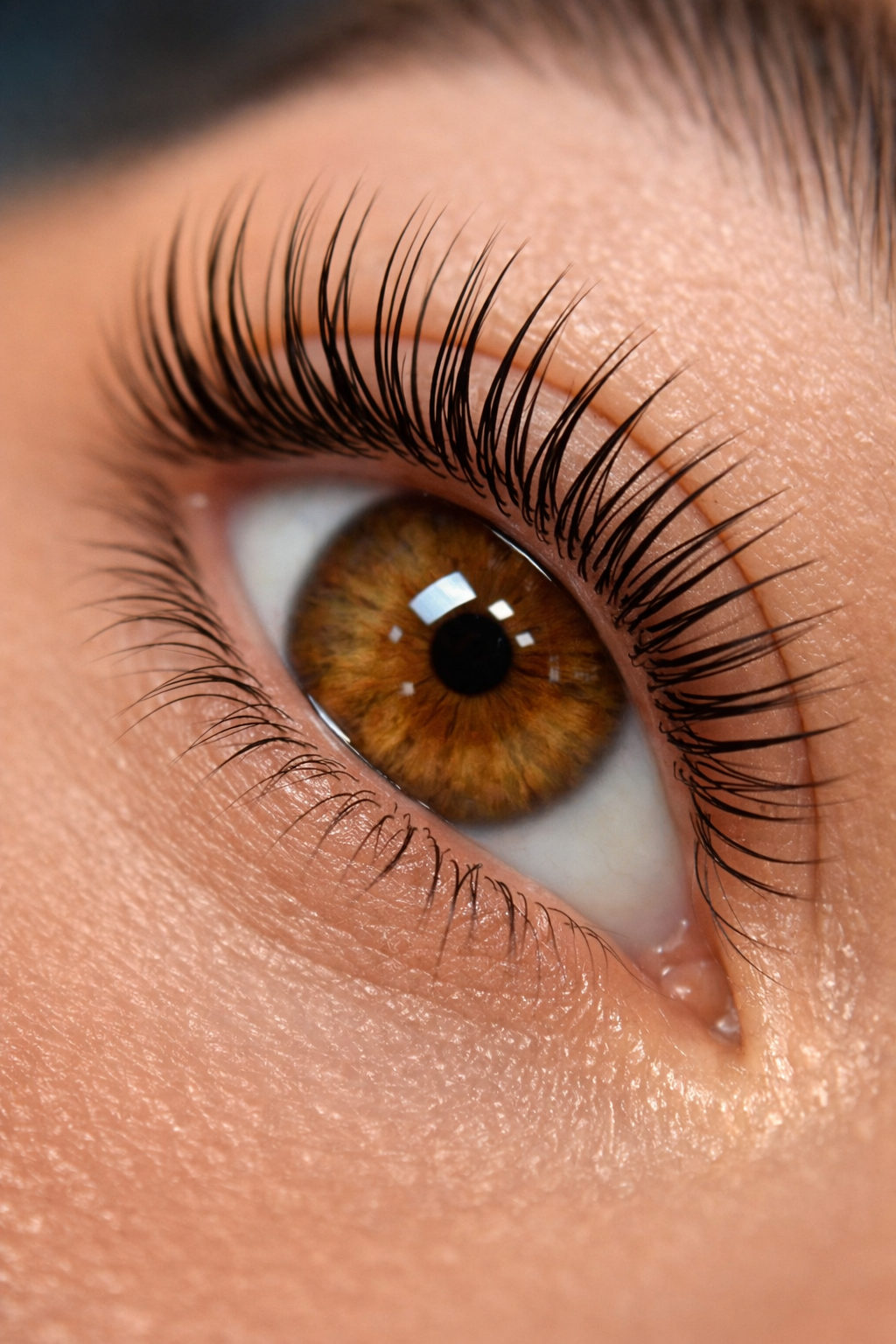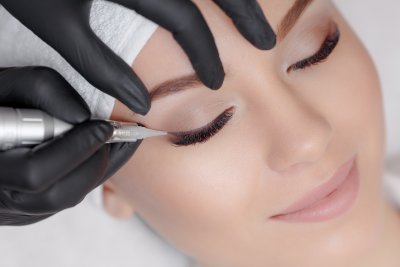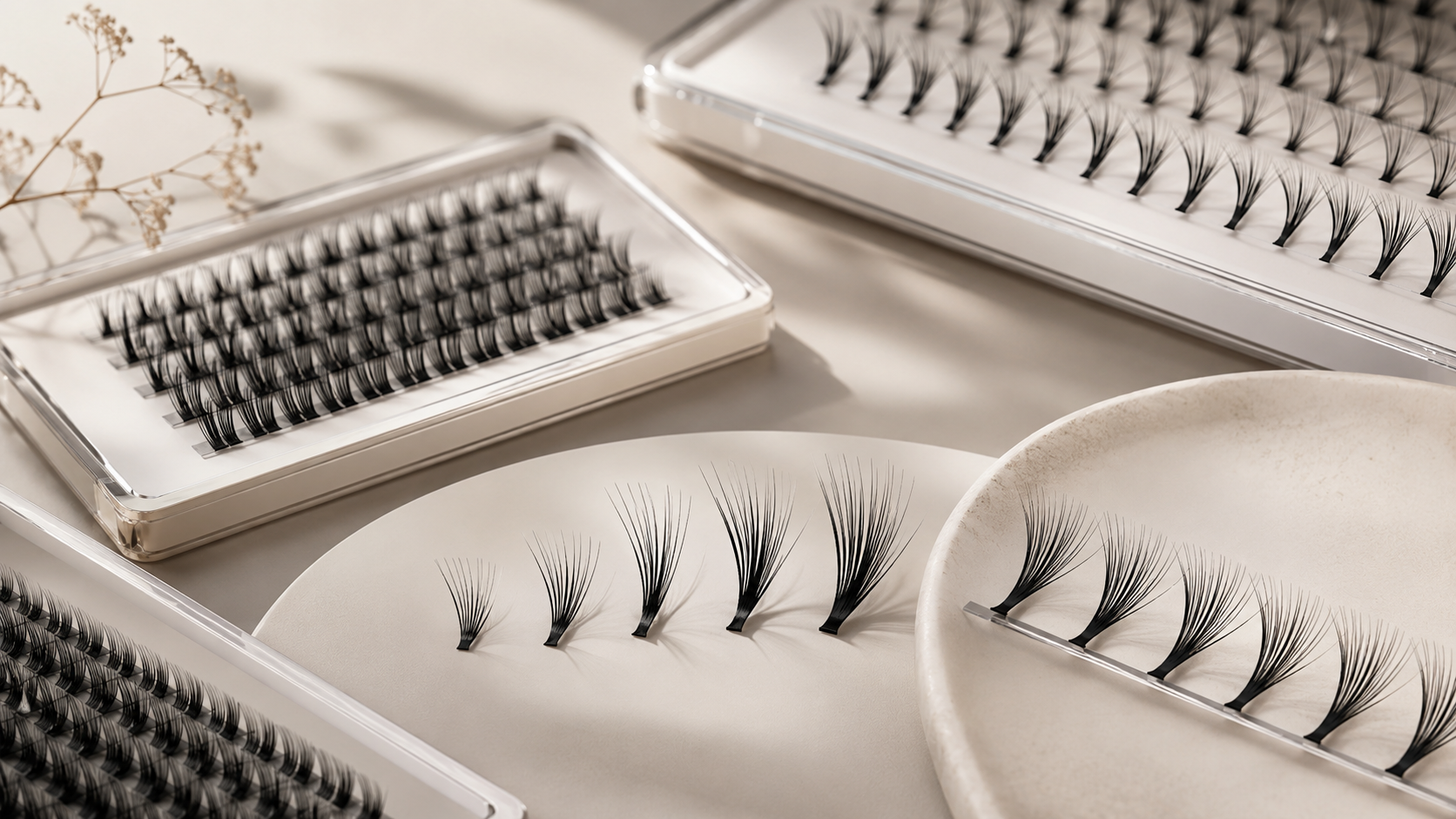
Cat eye is a lash design where the line is visually extended toward the outer corner of the eye. A successful result is not based on placing the longest lashes at the very end, but on a controlled mapping that takes eye shape, the direction of natural lashes, and the load-bearing capacity of the outer corner into account.

Quick answer
Build a cat eye through a gradual increase in length toward the outer part of the eye, but often finish with a slight taper in the outermost zone. Place the peak of the design before the weakest outer corner and adapt the curl and weight according to the natural lashes.
What characterizes a cat eye mapping?
Cat eye creates a horizontal, outward-drawn direction. The visual peak is normally in the outer third, not automatically on the last natural lash. The difference from doll eye is that doll eye gathers length closer to the center, whereas cat eye shifts the focus outward. A soft squirrel variant can be better when the outer corner grows downward.
Step 1: analyze the eye shape
Mark the inner corner, the outer edge of the iris, and where the natural lash line starts to drop. On an upturned or almond-shaped eye, a distinct cat eye can enhance the shape. On downward-sloping outer corners, an outer zone that is too long can drag the expression downward; in this case, move the peak inward and taper the final zones.
Step 2: build the length transition
Divide the lash line into small zones and increase the length gradually. Avoid large jumps between adjacent zones. Exact millimeters should always be determined by the customer's natural lashes, but the principle is a short inner corner, controlled increase, a distinct peak, and a stable finish.
Step 3: choose curl and volume
The curl affects the direction just as much as the length. A stronger curl can open up the gaze, while a straighter base reinforces the elongated expression. Adapt the width of the fan: narrower fans provide a clearer direction, while wider fans provide a softer and fluffier result.
Common mistakes
The most common errors are applying maximum length to the very outermost, weak natural lashes, using the same mapping on all eyes, and creating overly large jumps in length. Check the symmetry with eyes open before finishing the treatment.
Professional checklist
- Place the design's peak based on eye shape – not a fixed percentage.
- Taper down where the outer corner's natural lashes become finer.
- Check direction from below, from the front, and with eyes open.
- Document the zones so that the refill can be repeated.
Frequently asked questions
Does cat eye suit all eye shapes?
No. The design needs to be adapted. On clearly downward-sloping outer corners, a softer squirrel or kitten variant often works better.
Should the longest lashes be at the very end?
Not necessarily. Often, the result is more stable when the peak length is placed just before the outer corner and the final zones are tapered down.
Can cat eye be done with single lashes?
Yes. The design is created with mapping and can be performed with single, volume, or a mix of both.
Which curl is best for cat eye?
There is no universal curl. The choice depends on the direction of the natural lash and whether the goal is a more horizontal or opening result.
How do you avoid a heavy outer corner?
Reduce the length, total weight, or fan width in the outermost zones and place the design's peak slightly further in.